National Medicos Organisation Conference (NMOCON) 2026: One World One Family Mission Showcases Service at Scale
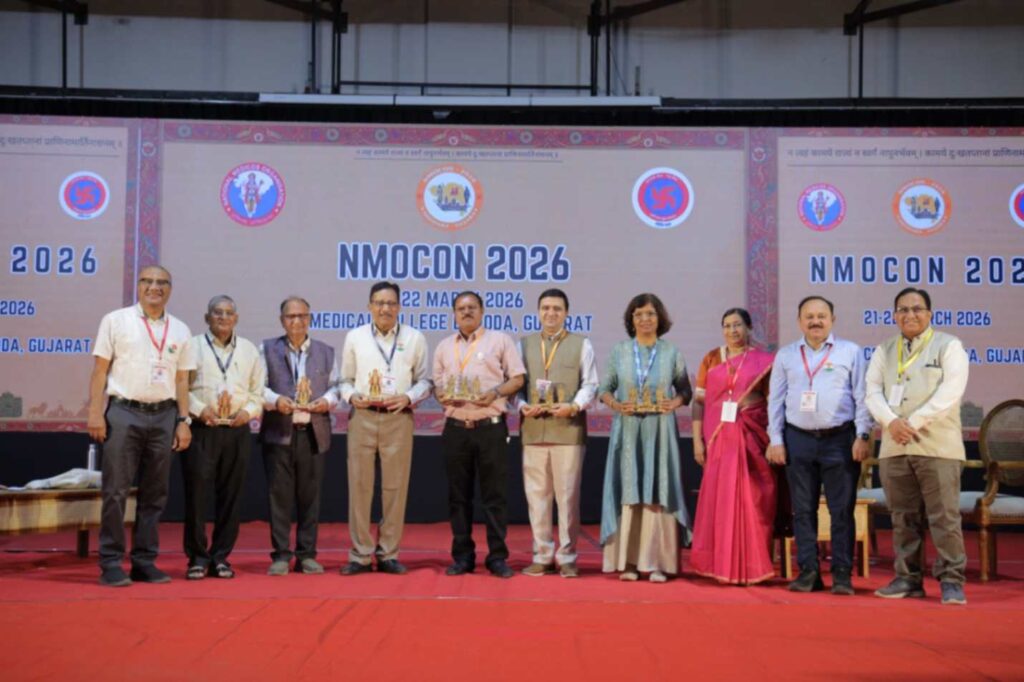
The 45th National Medicos Organisation Conference (NMOCON 2026) was held on 21st and 22nd March 2026 at Medical College Baroda, Vadodara, Gujarat. Bringing together doctors, medical students, and healthcare leaders from across India, the conference served as a dynamic platform for academic excellence, ethical reflection, and community-driven healthcare initiatives.
NMOCON, the flagship annual conference of the National Medicos Organisation, aims to nurture socially responsible medical professionals by integrating clinical excellence with a strong commitment to service and nation-building.
The conference featured a rich blend of scientific sessions, keynote orations, workshops, and student activities on Day 1, focusing on advancements in medicine and holistic healthcare approaches. Day 2 spotlighted impactful social initiatives through the special session “Seva Ke Anuthe Prayass”, which showcased inspiring models of service transforming communities across India
Seva Ke Anuthe Prayass: Stories of Service and Transformation
The session brought forward powerful grassroots efforts by organizations and individuals working in diverse areas such as women empowerment, child welfare, healthcare access, and nutrition.
One of the speakers, Dr. Anshu Mahesh (Snehalaya Trust), shared a deeply moving journey of over three decades of service — transforming the lives of vulnerable women, children, and marginalized communities through healthcare, education, rehabilitation, and social reform initiatives.
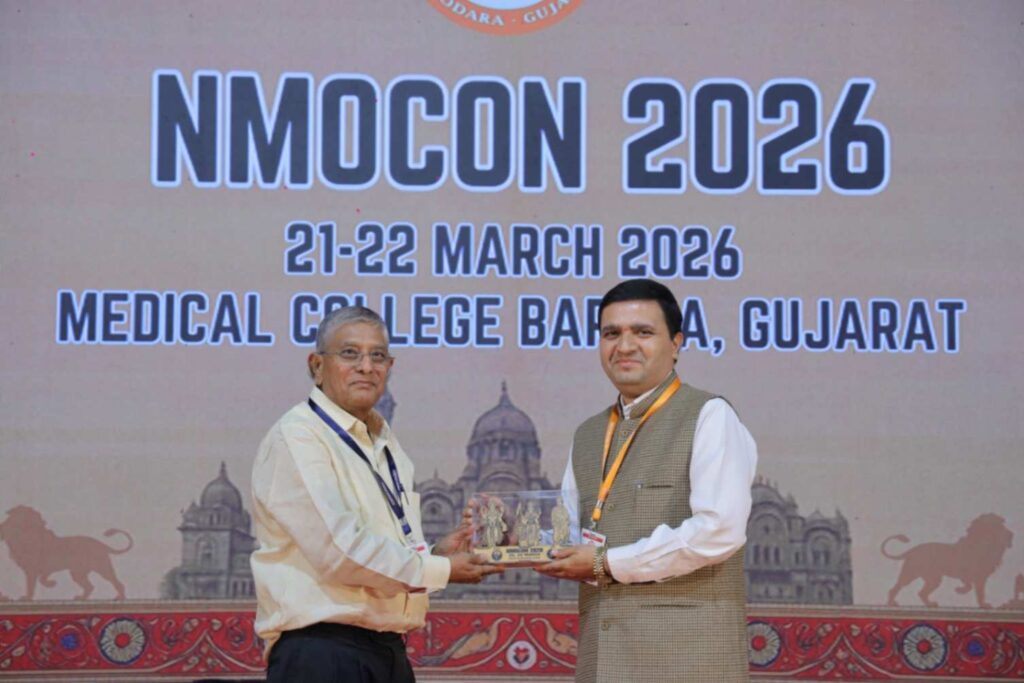
A defining highlight of the session was the address by Sushanth Karanth, who represents the One World One Family Mission and serves as National Manager – Corporate Communications at Sri Sathya Sai Annapoorna Trust.
At NMOCON, his talk followed a clear and impactful structure — beginning with Nutrition, then expanding into Healthcare and Education, presenting a holistic model for nation-building through service
Addressing Hidden Hunger Through Nutrition
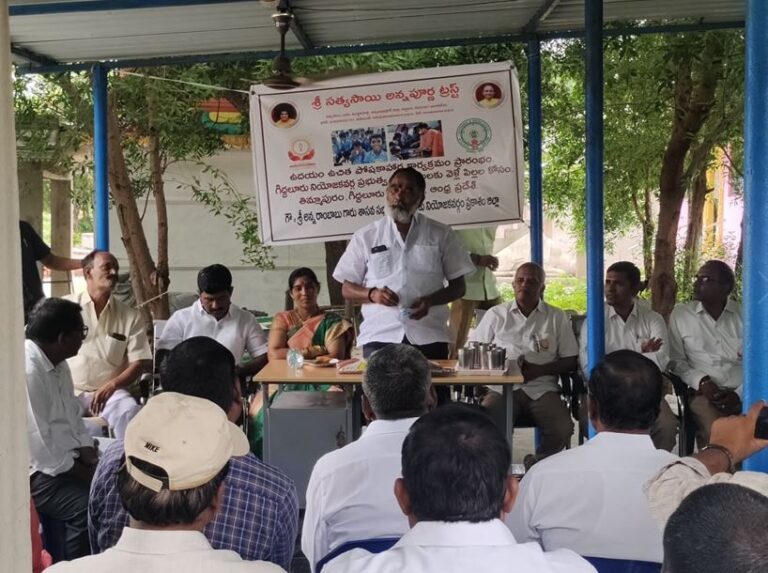
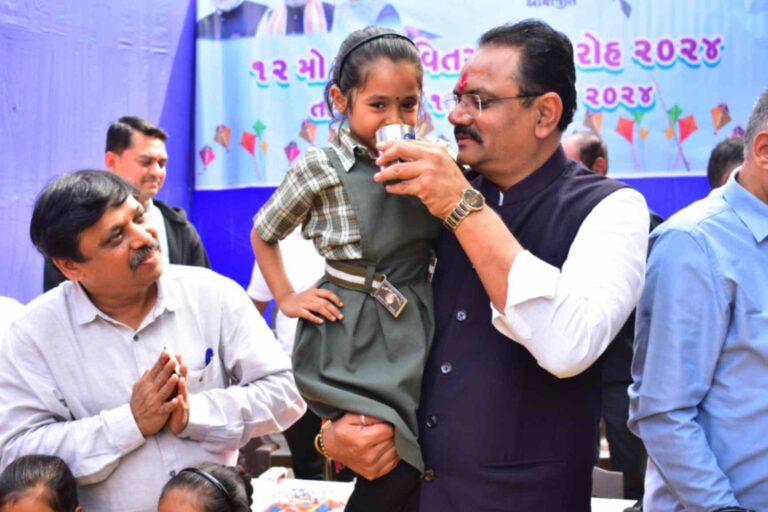
He began by drawing attention to a critical yet often overlooked issue — hidden hunger among school children. Despite existing mid-day meal schemes, a significant percentage of children arrive at school without proper morning nutrition, affecting their health, focus, and academic performance.
What started in 2012 as a small initiative has now grown into a nationwide movement providing daily morning nutrition to nearly 1 crore children across India through scientifically designed multi-nutrient supplements.
He emphasized how this initiative addresses both outer hunger, the immediate need for food, and inner hunger, which relates to long-term physical and cognitive development. By tackling both aspects simultaneously, the program has led to improved school attendance, better health indicators, and enhanced learning outcomes among children.
Expanding Impact: Healthcare & Education for All
Building on the foundation of nutrition, Sushanth highlighted how the mission extends into healthcare and education to create a holistic support system for the underserved. The initiative provides free healthcare services, including hospitals that offer quality treatment at no cost, along with holistic education systems featuring fully free educational institutions and even a free medical college.
Together, these efforts ensure that communities receive comprehensive support — spanning nourishment, learning, and medical care — enabling long-term, sustainable transformation.
A Collaborative Model for National Progress
A key message emphasized was the coming together of Sarkara (Government), Samaja (Society), and Sanstha (Institutions) as the foundation for meaningful and large-scale transformation. He explained that real impact is achieved when the government enables and supports, society actively participates and contributes, and institutions execute initiatives with efficiency and compassion.
This integrated approach is especially vital in advancing nutrition, healthcare, and education, ensuring that efforts are both inclusive and sustainable. Together, these three pillars have the potential to take the nation to greater heights through collective responsibility and coordinated action.
The vision of “One World One Family” calls for a world where access to basic needs is universal, and service becomes a shared duty.
The session concluded with a strong call to action — encouraging medical professionals to extend their role beyond clinical practice into community service and preventive healthcare.
The address stood out as a powerful reminder that scalable and sustainable change is possible when service is driven by collaboration, compassion, and vision.