CII Karnataka CSR Conclave 2025: Catalysing Integrated Approaches for Sustainable Development
The CII Karnataka CSR Conclave 2025, held on 19 December 2025 at ITC Windsor, Bengaluru, brought together corporate leaders, development practitioners, and CSR professionals to deliberate on “Catalysing Sustainable Development: Integrated Approaches in Learning, Livelihoods, Healthcare, Inclusive Resilience and Climate Action.” The conclave underscored a shared conviction: development challenges do not exist in silos, and CSR must evolve towards integrated, outcome-driven models.
Sakina Baker: The Case for Convergent CSR
Sakina Baker set the tone by emphasising that education, healthcare, livelihoods, and environmental sustainability are deeply interconnected. She highlighted that educating a child impacts not just learning outcomes, but also household resilience, healthcare access, and long-term economic stability. Her message was clear—fragmented CSR limits impact, while convergence addresses root causes.
- V. Rao: From Spend to Impact
- V. Rao, Convenor of the CII Karnataka CSR Panel, reinforced the shift from compliance-led CSR to impact-driven governance. He stressed that boardroom conversations are no longer about “how much was spent” but about what changed on the ground, urging corporations to adopt long-term, outcome-based partnerships aligned with regional priorities.
Panel Discussion: Collaboration as a Force Multiplier
Mr G V Rao – Convenor, CII Karnataka CSR Panel & Director – CSR and External Industry Affairs – Volvo Group India
Ms Shaina Ganapathy – Head – Community Outreach Initiatives – Embassy Group
Mr Ravi Tennety – Managing Director – NTTF
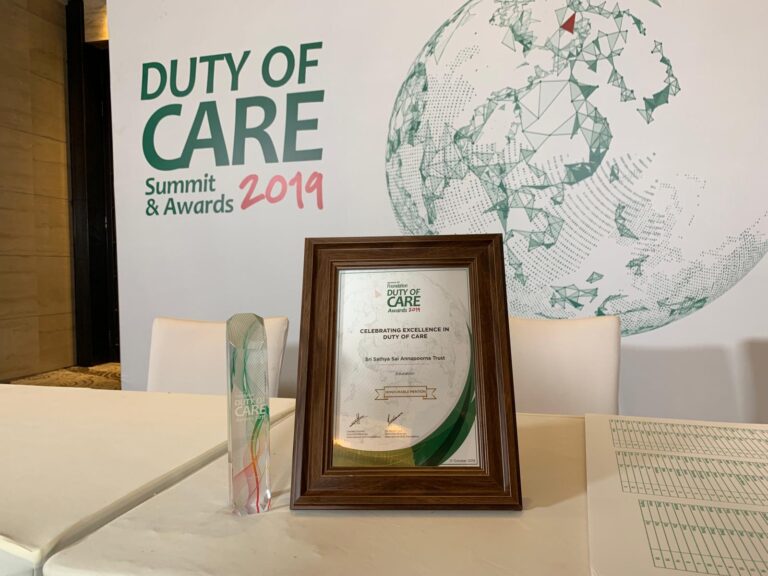
Mr Ashish Bhardwaj – Trustee & Chief Development Officer (CDO), Sri Sathya Sai Annapoorna Trust
Ms Khushboo Goyal – CSR Projects & Social Media – Vivekananda Kendra
The panel discussion brought together voices from diverse sectors, highlighting how collaboration between corporates, NGOs, and government can unlock scale and sustainability. Speakers shared real-world insights on integrated education infrastructure, skill development pipelines, healthcare access, and community resilience—demonstrating that shared value creation is achievable when expertise and resources converge.
Shaina Ganapathy: Collaborative Models in Education
Shaina Ganapathy shared the Embassy Group’s collaborative CSR model in building and maintaining government school infrastructure. By pooling resources with corporate partners and leveraging internal project management expertise, Embassy has accelerated school construction while ensuring quality and accountability. She highlighted how employee engagement and cross-sector collaboration amplify both scale and impact.
Ravi Tennety: Skilling as an Economic Imperative
Ravi Tennety spoke passionately about the urgent need for industry-aligned vocational training. Drawing on decades of experience, he explained how high-quality skilling—rooted in practice, industry relevance, and faculty excellence—can bridge India’s widening demand-supply gap in manufacturing and technology roles. He stressed that skills, not degrees alone, will power India’s economic future.
Ashish Bhardwaj: Nutrition, Education, and Healthcare at Scale
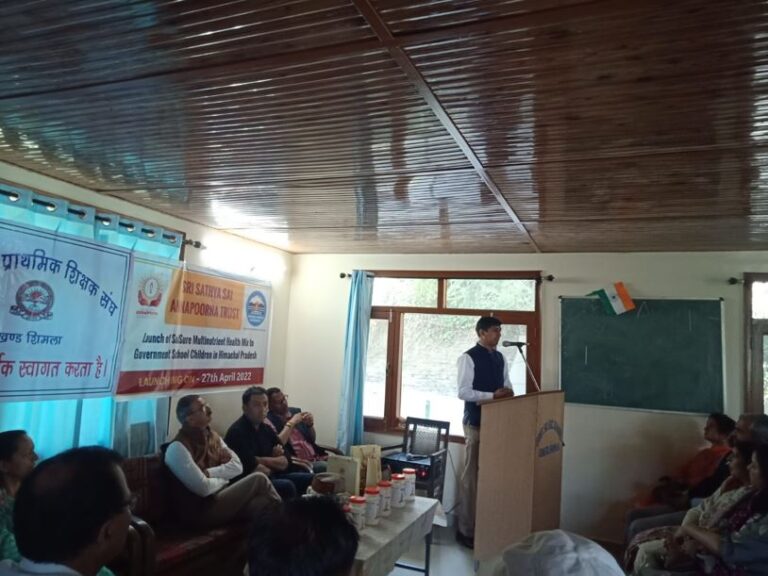
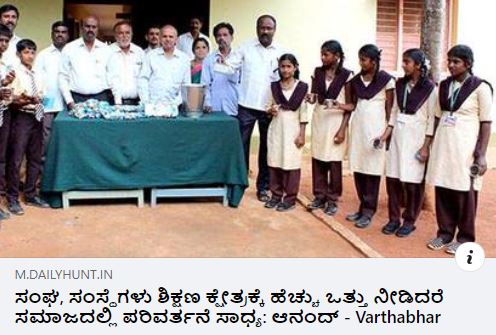
Ashish Bhardwaj delivered a deeply compelling address on how morning nutrition acts as an enabler for education. He shared how a simple intervention that began with 50 children has grown to serve over one crore students, improving attendance, learning outcomes, and health indicators. He further highlighted the trust’s work in free education and healthcare, demonstrating how integrated social investments can deliver extraordinary social return on investment.
Khushboo Goyal: Empowering Communities Where They Live
Khushboo Goyal spoke about Vivekananda Kendra’s work in the North-East, focusing on vocational training, women entrepreneurship, and community-led development. She emphasised that true nation-building lies in empowering communities locally, preserving culture, strengthening livelihoods, and reducing forced migration through education and skill development.
Conclusion
The CII Karnataka CSR Conclave 2025 reaffirmed that CSR must transition from isolated interventions to integrated, collaborative ecosystems. Karnataka, with its strong corporate base and diverse development needs, is uniquely positioned to become a model for outcome-oriented CSR. The conclave served as a powerful reminder that when corporates, communities, and governments work together, CSR becomes a catalyst for lasting social transformation