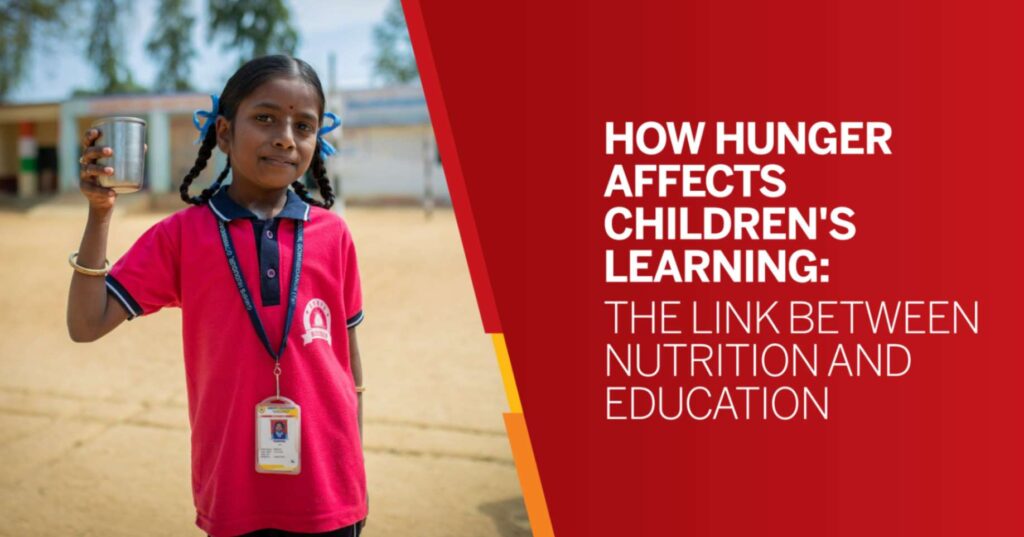
How Hunger Affects Children’s Learning: The Link Between Nutrition and Education
Every school day, millions of children walk into classrooms carrying more than their bags — some carry the weight of an empty stomach. Hunger is one of the most overlooked barriers to learning, and it doesn’t just affect a child’s body. It shapes how well they concentrate, participate, and grow within the education system.
Understanding how hunger affects children’s learning is essential for parents, educators, and communities working to build a stronger future. Hunger is not simply about missing a meal — it’s a condition that touches nearly every part of a child’s school experience, from focus in the classroom to long-term brain development.
Why Hunger Is More Than a Food Problem
When we talk about hunger, it’s easy to think only of the physical discomfort. But childhood hunger has ripple effects that extend into cognitive function, emotional well-being, and academic performance. A child dealing with hunger on a regular basis is also dealing with fatigue, poor concentration, and reduced motivation — all of which directly interfere with learning outcomes.
This is why addressing hunger isn’t just a welfare issue; it’s an education issue. Reliable access to nutrition during school hours can be the difference between a child who thrives and one who quietly falls behind.
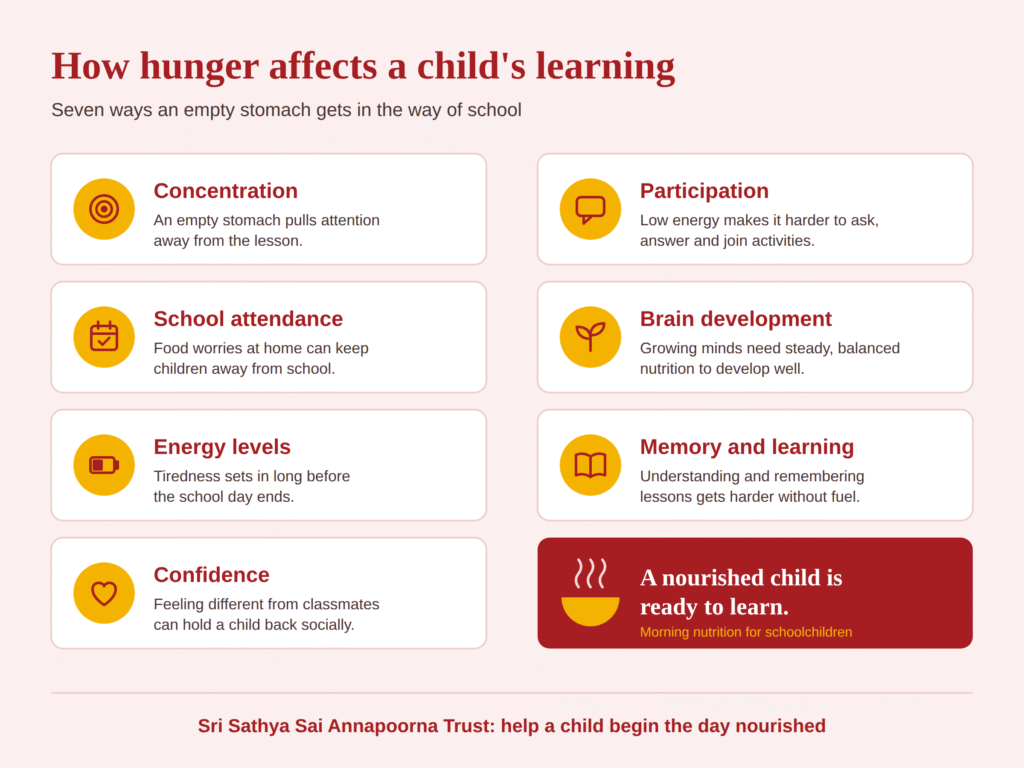
1. Hunger Reduces Concentration in the Classroom
Concentration is the foundation of learning. Children need to listen, absorb information, and respond to lessons in real time. When hunger sets in, that ability weakens. A hungry child is often distracted, thinking more about discomfort than about the lesson being taught.
Providing consistent nutrition — especially a nutritious breakfast — helps children arrive at school with the energy needed to stay focused throughout the day.
2. Hunger Lowers Classroom Participation
Active participation — asking questions, joining group work, engaging with peers — requires energy that hunger takes away. Children experiencing hunger often withdraw, becoming quieter and less involved than their well-fed classmates.
When schools prioritize nutrition alongside academics, they create an environment where every child, regardless of background, has an equal opportunity to participate.
3. Hunger Affects School Attendance
Hunger doesn’t only affect children while they’re in class — it can keep them from attending school altogether. Families facing food insecurity may struggle to send children to school consistently, especially when basic needs aren’t being met at home.
School-based nutrition programs help bridge this gap by ensuring that hunger isn’t a reason a child misses valuable classroom time.
4. Nutrition Fuels Brain Development
Nutrition plays a direct role in how a child’s brain develops. The early years of life are critical for cognitive growth, and inadequate nutrition during this period can have long-term consequences.
A diet rich in essential nutrients — from grains and pulses to fruits, vegetables, and dairy — supports memory, reasoning, and problem-solving skills. Without proper nutrition, children may struggle to reach their full cognitive potential, making the fight against hunger inseparable from the pursuit of better education outcomes.
5. Hunger Drains Energy Levels
School days are physically and mentally demanding. Children move between subjects, participate in activities, and are expected to stay alert for hours at a stretch. Hunger drains the very energy needed to meet these demands.
A single nutritious meal in the morning can significantly improve a child’s stamina and engagement, proving how closely nutrition and academic performance are connected.
6. Hunger Impacts Memory and Learning Retention
Learning isn’t just about receiving information — it’s about processing and retaining it. Hunger disrupts this process. Children who are hungry often find it harder to concentrate long enough to commit new concepts to memory.
While many factors — including sleep, home environment, and teaching quality — influence learning, hunger remains one of the most preventable barriers. Solving hunger through consistent nutrition support removes at least one major obstacle standing between a child and academic success.
7. Hunger Affects Confidence and Social Interaction
Hunger isn’t only physical — it’s social and emotional too. Children who regularly experience hunger may feel isolated or different from classmates who have consistent access to food. This can quietly erode confidence and affect how children interact with peers.
Ensuring every child has access to nutritious food helps create a more inclusive, emotionally supportive school environment — one where hunger doesn’t define a child’s social experience.
The Role of School Nutrition Programs
Tackling hunger requires more than good intentions — it requires structured, sustained action. School nutrition programs are one of the most effective tools for reducing hunger’s impact on education. When implemented consistently, these programs ensure children have access to nutritious meals regardless of their family’s financial situation.
Governments, schools, NGOs, and communities all play a role in this effort. Organizations working on the ground can mobilize volunteers, resources, and awareness to make nutrition programs more effective and far-reaching.
How You Can Help Fight Hunger
Reducing hunger’s impact on children’s learning is a shared responsibility. Here’s how individuals and organizations can contribute:
- Donate to trusted nutrition programs supporting schoolchildren
- Volunteer time or professional skills like design, marketing, or fundraising
- Partner through corporate social responsibility (CSR) initiatives
- Raise awareness about the connection between hunger and education in your community
Every contribution — big or small — helps build a stronger support system against childhood hunger.
Building a Future Free From Hunger
Solving hunger isn’t a one-time act; it requires consistent, long-term commitment. Children need regular access to nutritious meals, not just occasional support. This is where sustained cooperation between governments, NGOs, schools, and individuals becomes essential.
Sri Sathya Sai Annapoorna Trust is committed to addressing hunger by providing morning nutrition to schoolchildren, working alongside volunteers and communities through seva. By supporting consistent nutrition efforts, we help remove hunger as a barrier to learning — giving children the chance to focus, grow, and dream without limitations.
Give a Child More Than a Meal

Understanding how hunger affects children’s learning reveals why nutrition is about far more than food on a plate. It’s about giving children the energy, confidence, and stability to succeed in school and in life.
Sri Sathya Sai Annapoorna Trust continues working to fight hunger by providing consistent morning nutrition to schoolchildren. But real, lasting change requires all of us.
Your support can make a difference. Donate today, help nourish a child, and help build a future where hunger no longer stands in the way of learning.
Frequently Asked Questions
What is the role of NGOs in fighting child hunger?
The role of NGOs in fighting child hunger includes providing nutritious meals, reaching underserved communities, supporting schools, creating nutrition awareness, mobilising volunteers and resources, developing partnerships and monitoring programme impact.
Can an individual help fight child hunger?
Yes. Individuals can donate, volunteer, organise awareness activities, support fundraising campaigns, share credible information and contribute professional skills to organisations working on hunger and nutrition.
Is donating money the only way to support hunger-relief programmes?
No. People can contribute through time, skills, awareness, fundraising, volunteering and community participation. Different forms of support can complement financial contributions.
How can businesses participate in the movement against hunger?
Businesses can support credible nutrition programmes through CSR initiatives, employee volunteering, fundraising, partnerships and other resources that align with their social-impact objectives.
Why is nutrition important for schoolchildren?
Adequate nutrition supports children’s growth, health and development and can contribute to their ability to participate effectively in school and daily activities.