Role of NGOs in Fighting Child Hunger: How Everyone Can Be Part of the Movement Against Hunger
Child hunger is not simply about missing a meal. It is a challenge that can affect a child’s health, growth, learning, concentration and future opportunities. While governments and international organisations work towards improving food security and nutrition, NGOs play an important role in reaching communities and turning social support into meaningful action.
The role of NGOs in fighting child hunger becomes especially important because NGOs can work closely with schools, families, volunteers, donors and local communities. However, ending hunger cannot be the responsibility of NGOs alone. Every individual has a role to play.
From donating a meal to volunteering time, supporting nutrition programmes, organising a community initiative or simply creating awareness, small actions can become part of a larger movement against hunger.
Understanding Child Hunger
Child hunger occurs when children do not have reliable access to sufficient and nutritious food. A child may experience hunger because of poverty, food insecurity, unemployment, rising food costs, limited access to nutritious diets or difficult family circumstances.
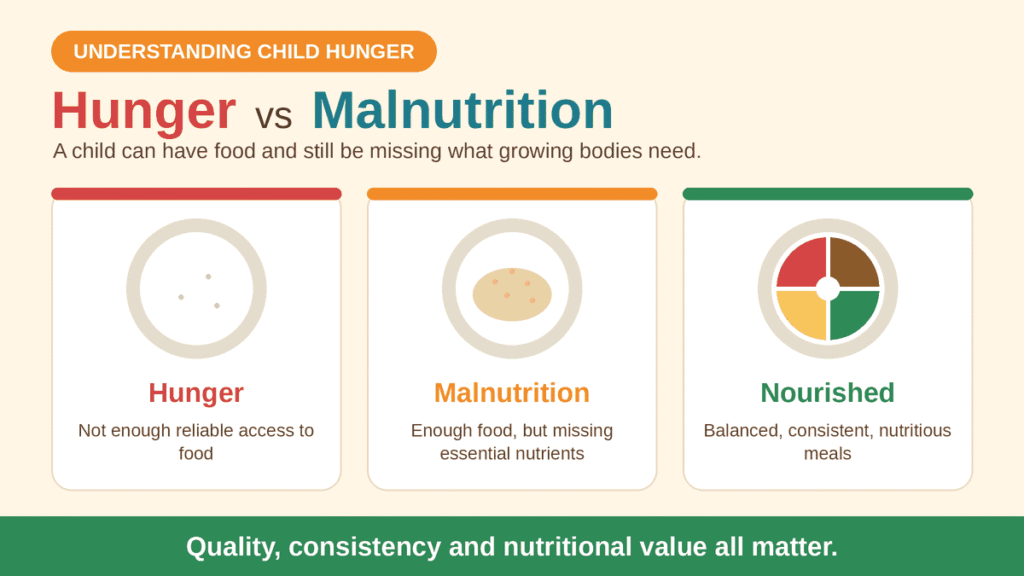
There is also a difference between hunger and malnutrition. A child may receive enough food in terms of quantity but still lack essential nutrients required for healthy development. This is why addressing child hunger requires more than simply providing calories. The quality, consistency and nutritional value of food matter.
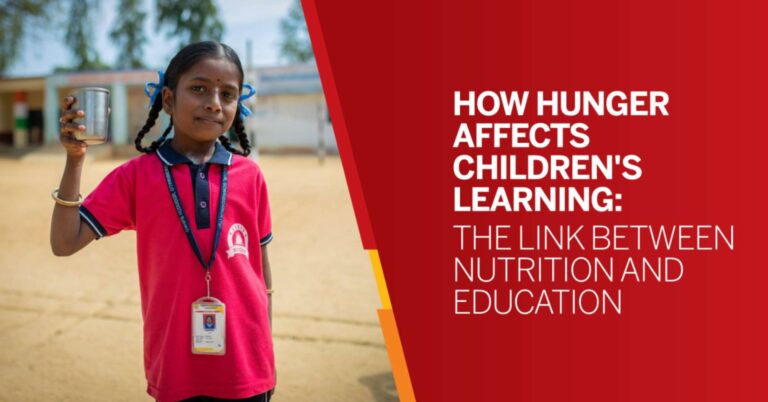
For children, nutrition is closely connected with their ability to grow, learn and participate in school and everyday life. Ensuring access to nutritious food can therefore become an important investment in human development.
The Role of NGOs in Fighting Child Hunger
The role of NGOs in fighting child hunger extends beyond distributing food. NGOs can identify communities that require support, work with schools, mobilise volunteers, create nutrition programmes, raise resources and build partnerships.
Their community-level presence can help them understand local challenges and design programmes according to the needs of children and families.
Some NGOs focus on direct food support, while others work on nutrition awareness, community development, education, livelihood support or food security. When these efforts are combined, they can contribute to addressing both immediate hunger and some of the underlying factors associated with food insecurity.
How NGOs Help Create Change
1. Providing Nutritious Meals
One of the most direct ways organisations can address child hunger is by providing nutritious meals to children.
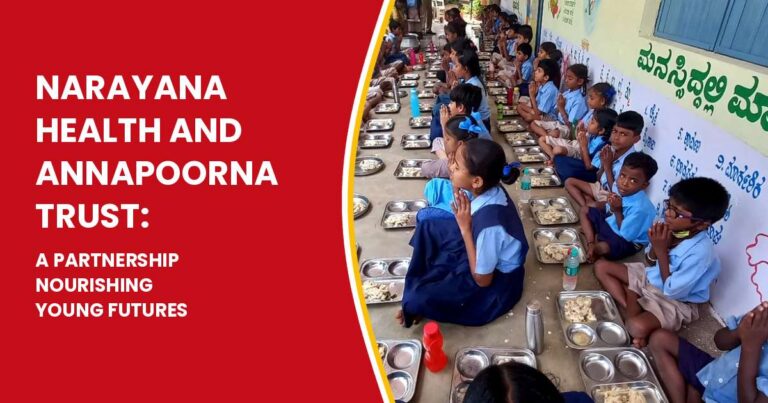
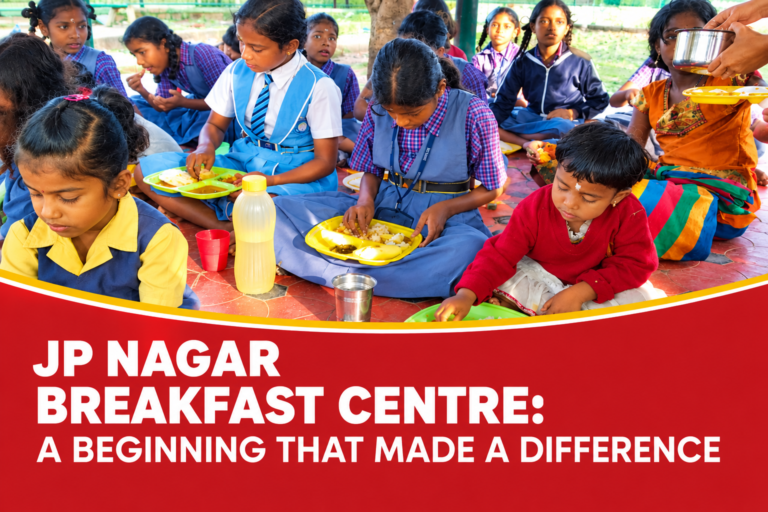
For a child attending school, having a nutritious meal can help address immediate hunger while supporting a healthier school-day routine. School-based nutrition programmes can also complement government initiatives designed to improve children’s nutrition and school participation.
The objective is not merely to serve food but to provide meals that contribute meaningful nutritional value.
2. Reaching Children Through Schools
Schools provide an effective setting for nutrition initiatives because they bring children and communities together.
NGOs can collaborate with schools to understand local requirements, support meal programmes and engage teachers and communities. Such partnerships can make nutrition support more organised and consistent.
The role of NGOs in fighting child hunger is therefore closely connected with education. Supporting a child’s nutrition can also support the environment in which that child learns.
3. Creating Awareness About Nutrition
Hunger cannot be addressed only by giving food. Communities also need awareness about balanced diets, child nutrition, hygiene and healthy food choices.
NGOs can conduct awareness programmes, workshops and community activities to help families understand why nutritious food is important for children’s development.
When parents, teachers and community members understand nutrition better, they can become active participants in improving children’s well-being.
4. Mobilising Volunteers and Resources
NGOs often bring people together around a common social purpose. Volunteers can contribute their time, skills and local knowledge, while donors can provide financial support.
Businesses can contribute through corporate social responsibility initiatives, employee volunteering or partnerships. Schools and colleges can organise awareness campaigns and community activities.
This collective participation makes the role of NGOs in fighting child hunger much more powerful because the impact is created through a network of people rather than one organisation working alone.
How Can You Participate in the Movement Against Hunger?
Ending child hunger requires collective action. You do not have to be a large donor or an organisation to contribute. There are several practical ways to participate.
1. Support a Child Nutrition Programme
One of the simplest ways to contribute is by supporting a credible organisation that works directly on child nutrition.
Even a small contribution can become meaningful when many people participate consistently. Before donating, understand the organisation’s work, beneficiaries, programmes and reporting practices.
Regular contributions can also help organisations plan their programmes more effectively.
2. Volunteer Your Time
Not every contribution has to be financial.
You can volunteer your skills or time with organisations working on hunger and nutrition. Depending on the organisation’s requirements, volunteers may support awareness campaigns, fundraising activities, events, content creation, community outreach or other activities.
Professionals can also contribute specialised skills such as digital marketing, design, technology, communications, accounting or event management.
3. Organise a Hunger Awareness Drive
Awareness can be the first step towards action.
Schools, colleges, resident associations, companies and community groups can organise hunger-awareness activities. These could include educational sessions, social media campaigns, donation drives or discussions about child nutrition.
The objective should be to move beyond simply talking about hunger and encourage people to take a practical action.
4. Use Your Social Media Platform
Social media can help important causes reach people who may otherwise never encounter them.
You can share credible information about hunger, explain why child nutrition matters and highlight verified organisations working in this area.
Instead of sharing unverified statistics or emotional claims, focus on accurate information and meaningful stories. Responsible awareness can encourage people to learn more and participate.
5. Encourage Workplace Participation
Companies can make hunger relief part of employee engagement and social responsibility programmes.
Employees can participate in volunteering activities, fundraising campaigns or organisation-led nutrition initiatives. Businesses can also explore long-term partnerships with credible NGOs.
A workplace initiative becomes more meaningful when participation is voluntary, transparent and connected to measurable outcomes.
6. Create Community-Level Initiatives
Local communities can also take action.
Resident groups, schools, community organisations and youth groups can identify opportunities to support nutrition initiatives in their area. Instead of creating short-term activities without follow-up, communities can work with established organisations that already have systems for reaching beneficiaries.
The role of NGOs in fighting child hunger can become stronger when communities actively participate rather than seeing NGOs as the only solution.
7. Make Your Support Consistent
Hunger is a daily challenge, which means solutions also need consistency.
A one-time donation or event can provide immediate support, but sustained participation can help nutrition programmes continue over the long term.
Whether you donate, volunteer, raise awareness or support an organisation through your professional skills, consistency can make your contribution more valuable.
Why Collective Action Matters
The role of NGOs in fighting child hunger is important, but NGOs cannot eliminate hunger without support from society.
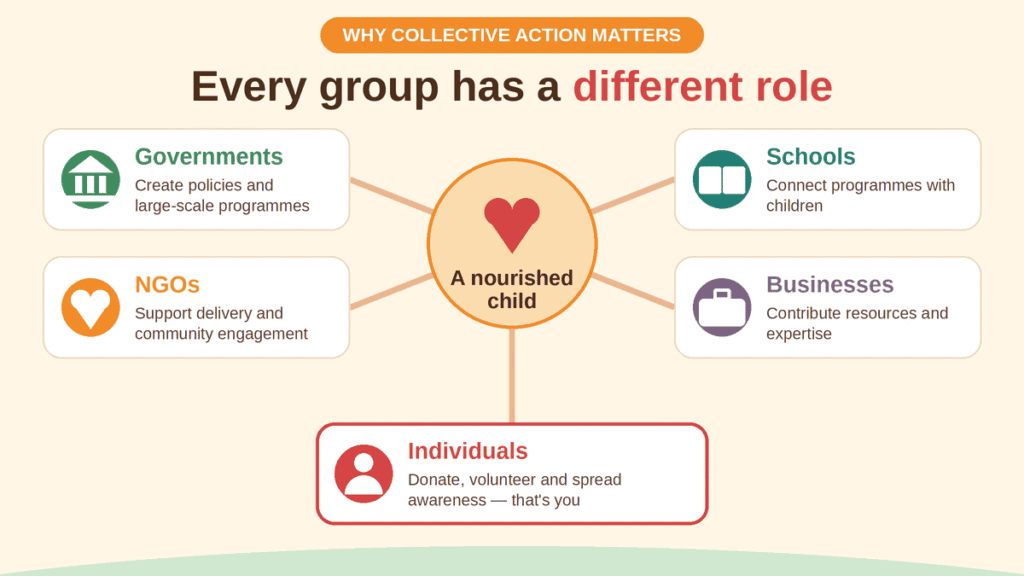
Governments can create policies and large-scale programmes. NGOs can support implementation and community engagement. Schools can connect programmes with children. Businesses can contribute resources and expertise. Individuals can donate, volunteer and spread awareness.
Each group has a different role.
The strength of the movement comes from connecting these efforts rather than expecting one organisation or one sector to solve the entire problem.
Choosing the Right NGO to Support
If you want to participate in the movement against hunger, choose organisations carefully.
Look for NGOs that clearly explain their programmes, beneficiaries, use of funds and impact. Check whether the organisation provides information about its work and maintains transparent communication with supporters.
You can also look for organisations that focus on long-term nutrition rather than only short-term food distribution.
Most importantly, understand where your contribution goes and choose a cause that aligns with your values and the type of impact you want to support.
Join the Movement Against Hunger
The role of NGOs in fighting child hunger is not limited to serving meals—it is about creating opportunities for communities to come together and build lasting solutions. But the movement becomes stronger when individuals, schools, businesses and communities participate.
You can contribute in a way that suits you: donate, volunteer, raise awareness, support a nutrition programme or use your skills for a social cause.
Sri Sathya Sai Annapoorna Trust is working towards addressing child nutrition by providing morning nutrition to schoolchildren and bringing communities together through seva. By supporting such initiatives, you can become part of an effort to help children begin their school day nourished and ready to learn.
A nourished child has a stronger foundation for learning, growing and building a better future. Be part of the movement against hunger.
Frequently Asked Questions
What is the role of NGOs in fighting child hunger?
The role of NGOs in fighting child hunger includes providing nutritious meals, reaching underserved communities, supporting schools, creating nutrition awareness, mobilising volunteers and resources, developing partnerships and monitoring programme impact.
Can an individual help fight child hunger?
Yes. Individuals can donate, volunteer, organise awareness activities, support fundraising campaigns, share credible information and contribute professional skills to organisations working on hunger and nutrition.
Is donating money the only way to support hunger-relief programmes?
No. People can contribute through time, skills, awareness, fundraising, volunteering and community participation. Different forms of support can complement financial contributions.
How can businesses participate in the movement against hunger?
Businesses can support credible nutrition programmes through CSR initiatives, employee volunteering, fundraising, partnerships and other resources that align with their social-impact objectives.
Why is nutrition important for schoolchildren?
Adequate nutrition supports children’s growth, health and development and can contribute to their ability to participate effectively in school and daily activities.