Zero Hunger: How We Are Turning a Global Goal into Morning Nutrition
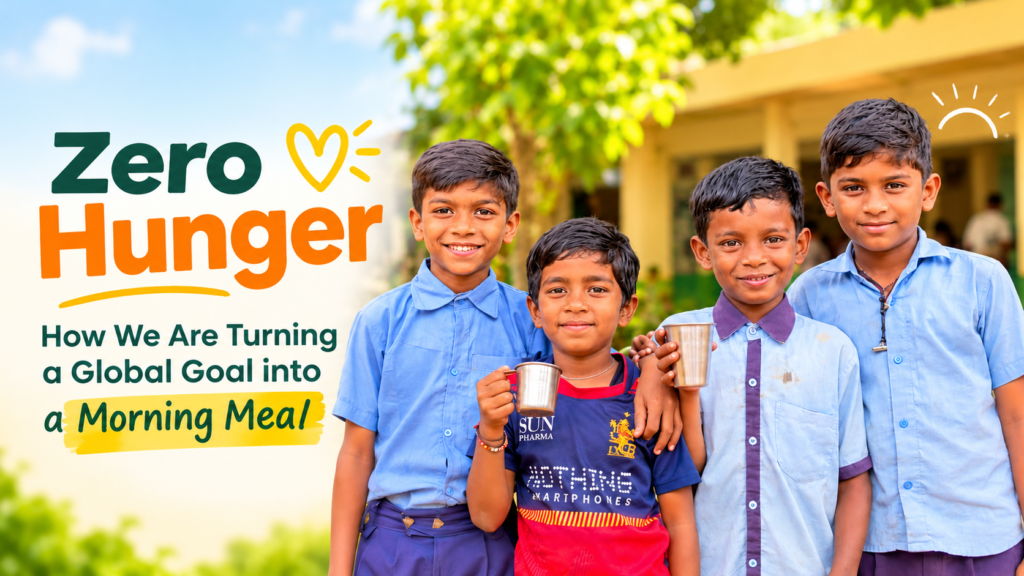
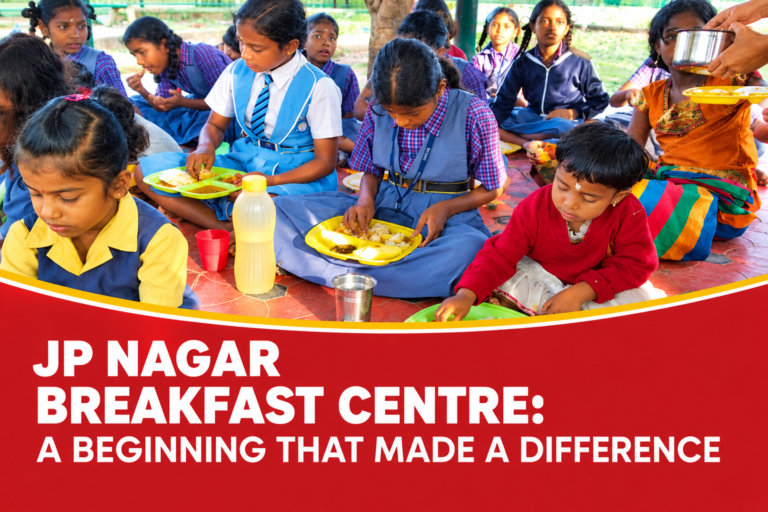
Zero hunger is the promise at the heart of the United Nations’ Sustainable Development Goal 2: a world where no child starts the day without food. At Annapoorna Trust, zero hunger is not a distant line in a policy paper. It is our daily work, and it begins before the school bell rings, with a warm, nutritious breakfast for children who might otherwise begin class on an empty stomach.
What Zero Hunger Really Means
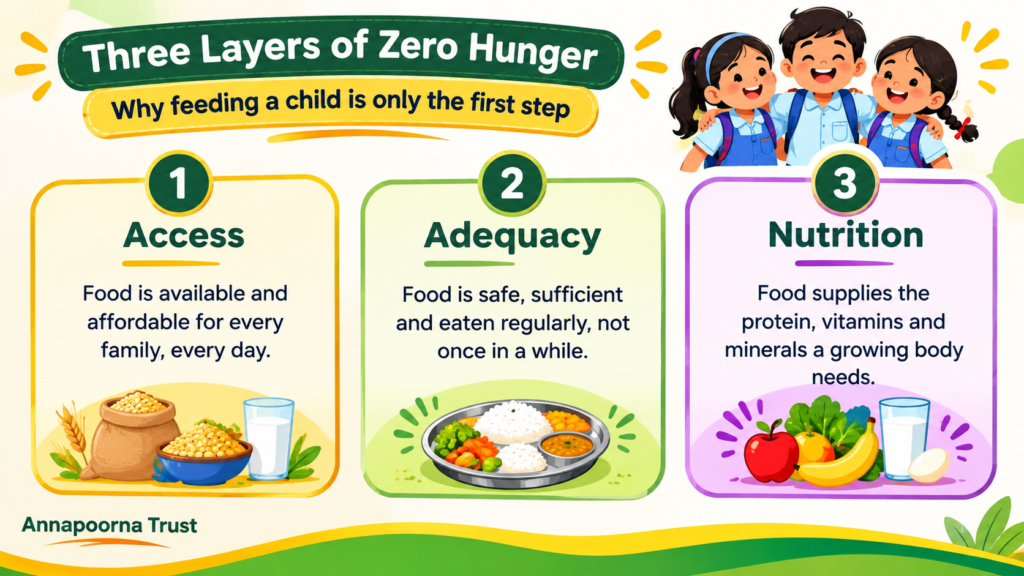
SDG 2 aims to end hunger, achieve food security, improve nutrition and promote sustainable agriculture by 2030. Many people read zero hunger as “enough calories for everyone.” In practice it has three layers:
- Access: food is available and affordable.
- Adequacy: food is safe, sufficient and eaten regularly.
- Nutrition: food supplies the protein, vitamins and minerals a growing body needs.
A child who eats but remains anaemic or stunted has been fed, yet not nourished. That is why we treat zero hunger as a question of quality as much as quantity.
Why Zero Hunger Matters in India Today
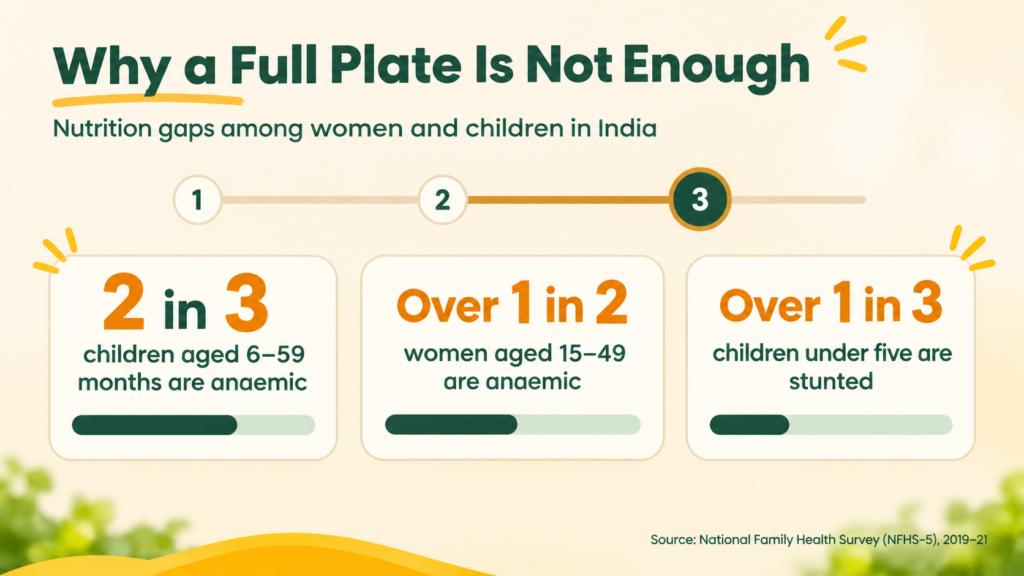
The FAO’s State of Food Security and Nutrition in the World report estimates that hundreds of millions of people around the globe still live with chronic hunger. India has improved food grain availability, but the National Family Health Survey (NFHS-5, 2019–21) shows where the real gap lies: about two in three children aged 6–59 months and more than half of women aged 15–49 are anaemic, and over a third of children under five are stunted.
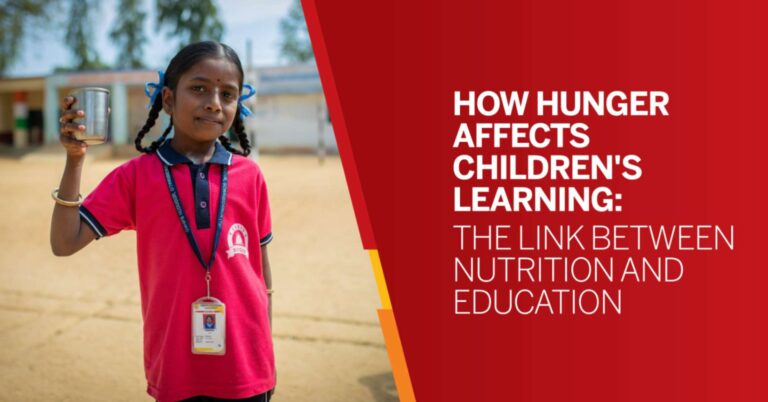
These figures show that zero hunger in India depends on what is on the plate, not only on whether there is a plate. Hunger also undermines education. A child who skips breakfast finds it harder to concentrate, remember lessons and stay in school.
How We Work Toward Zero Hunger
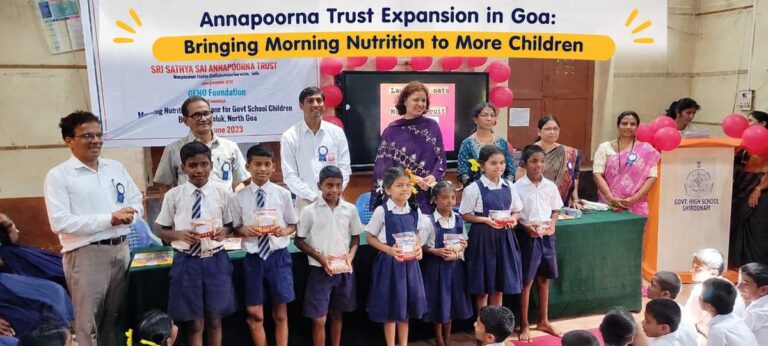
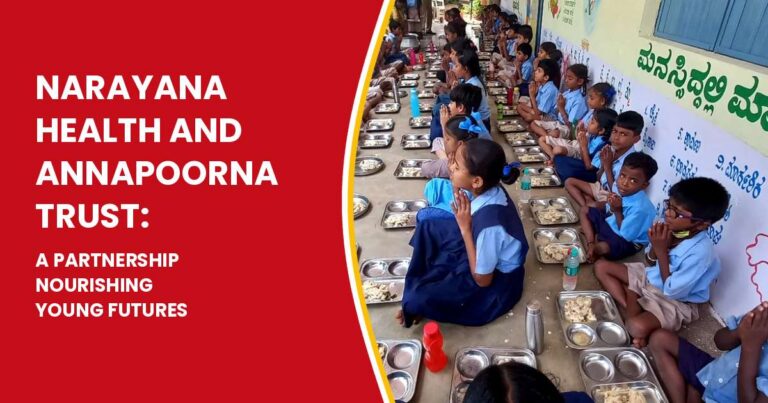
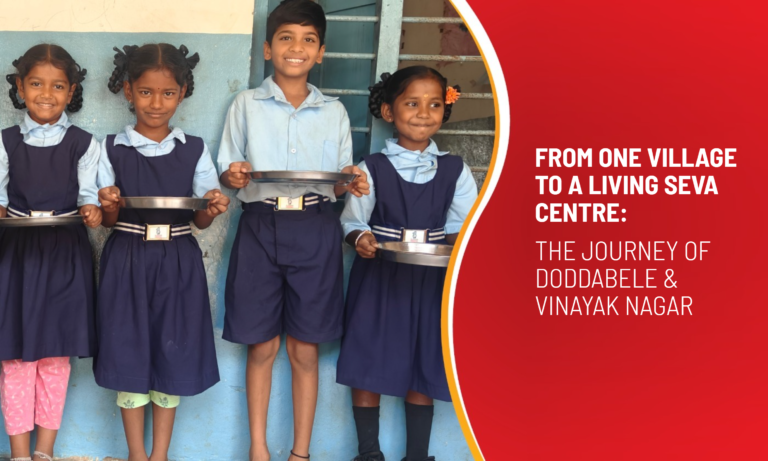
We run a Morning Nutrition Programme that serves breakfast to school children. Our work began with focused, community-based centres, and places such as Doddabele and Vinayak Nagar in Karnataka grew into living seva centres where volunteers, teachers and families work side by side. We have since carried the same model to other regions, including Telangana, Goa and Uttarakhand, where government schools and local partners have helped us reach more children.
Our approach to zero hunger rests on three simple commitments:
- Freshly prepared, hygienic meals that children actually enjoy.
- Consistency, because a child fed regularly learns better than a child fed occasionally.
- Community ownership, so that each centre is supported by local people who know their children by name.
Why Morning Nutrition Is Essential for Zero Hunger
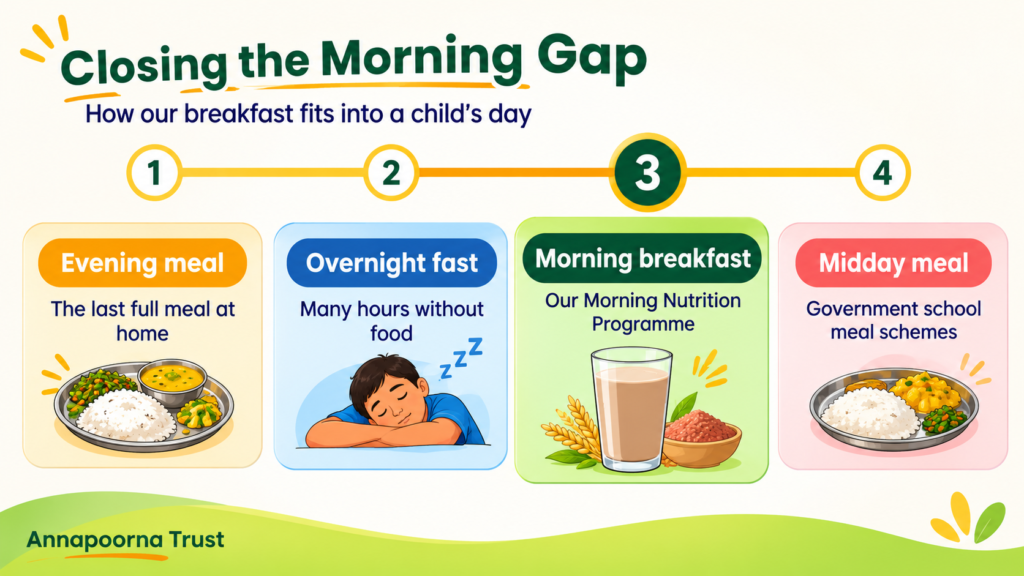
Children often begin their school day after a long overnight gap without adequate nutrition. For many children, this can mean attending school with an empty stomach or without the essential nutrients needed for healthy growth and development. Nutritional support in the morning helps address hunger, hidden hunger, and nutrient deficiencies while supporting concentration, learning, and overall well-being.
The Annapoorna Trust Morning Nutrition Programme is designed to complement government schemes, not duplicate them. By addressing the morning nutritional gap and providing essential nutrients to schoolchildren, the programme helps bring a child’s day closer to the full promise of Zero Hunger.
Beyond the Plate: Fighting Hidden Hunger
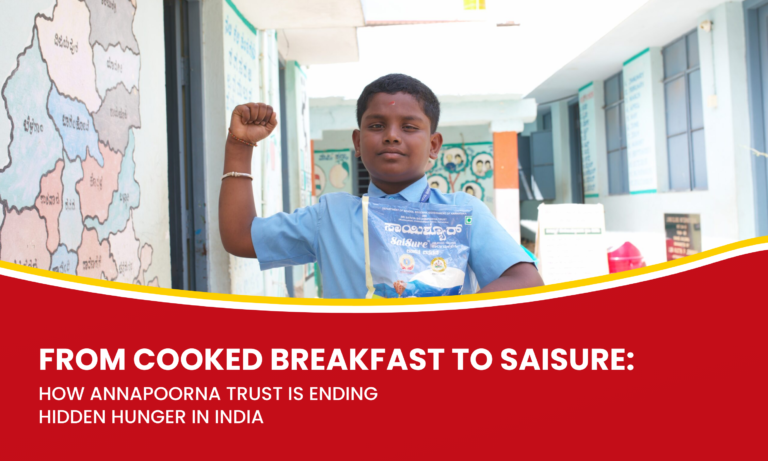
Even a full stomach can hide a deficiency. Hidden hunger is the lack of essential micronutrients such as iron, calcium and vitamin A, and it can affect growth and immunity without any visible sign. To address it, we have introduced SaiSure, a fortified ragi-based nutrition product. Ragi is naturally rich in calcium and fibre, and fortification adds micronutrients that children often miss. This is how zero hunger moves from filling plates to building healthy futures.
How You Can Support Zero Hunger
Achieving zero hunger is a shared responsibility. You can help in several ways:
- Sponsor a child’s breakfast through our website.
- Volunteer at a centre or support local seva activities.
- Partner as an organisation through your CSR or employee giving programmes.
- Spread awareness by sharing this article with friends, family and colleagues.
Every contribution helps us bring zero hunger closer to one more classroom.
Frequently Asked Questions (FAQs)
1.What does zero hunger mean?
Zero hunger refers to SDG 2, the global goal to end hunger, ensure year-round access to safe and nutritious food, and end all forms of malnutrition by 2030.
2.Is zero hunger only about providing food?
No. Zero hunger also covers nutrition quality, sustainable farming and fair access to food. A meal that lacks key nutrients does not fully meet the goal.
3.How do we contribute to zero hunger?
Through our Morning Nutrition Programme, which serves breakfast to school children, and through fortified nutrition such as SaiSure, which targets hidden hunger.
4.Why is breakfast important for zero hunger in schools?
Breakfast fills the gap between the evening meal and school lunch, improving concentration, attendance and learning outcomes.
5.Can an individual really help achieve zero hunger?
Yes. Sponsoring a breakfast, volunteering time or sharing accurate information all strengthen community efforts toward zero hunger.