Hunger in the Classroom: How Morning Nutrition Gives Children a Fair Start
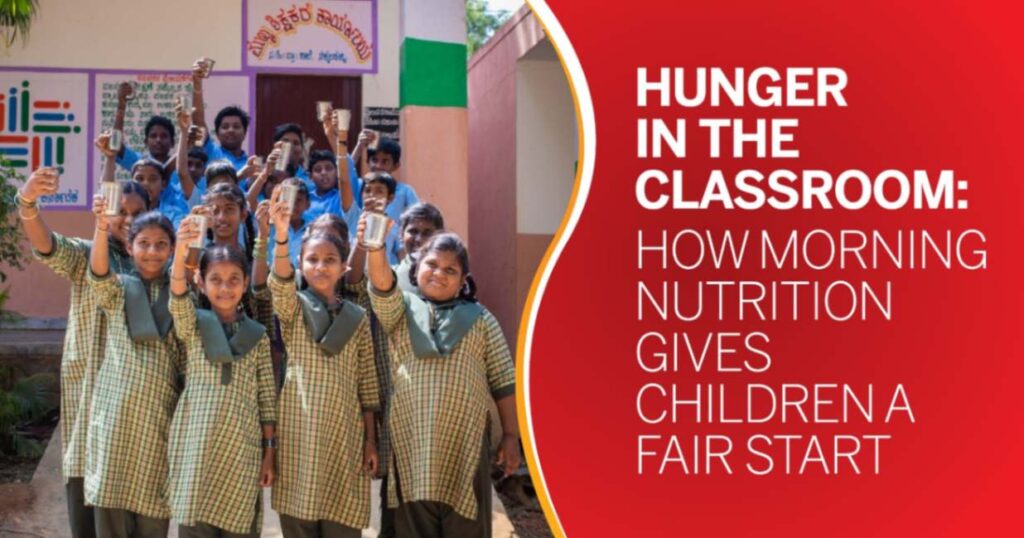
A child who reaches school without breakfast is already facing a challenge before the first lesson begins. While classmates prepare for mathematics, science, languages or other subjects, an empty stomach can make it difficult to concentrate, participate and learn.
Hunger does not always announce itself in a classroom. Sometimes, it appears as tired eyes, low energy, irritability, difficulty concentrating or a child quietly resting their head on the desk. For children from vulnerable and underserved communities, missing breakfast can become a recurring part of the school day.
At Sri Sathya Sai Annapoorna Trust, we believe that every child deserves a nourishing beginning to the day. Through our school-based programme, we work towards making morning nutrition accessible to children, helping them begin their school day with nourishment and renewed energy.
Why Does Breakfast Matter for School Children?
The hours between waking up and lunchtime are an important part of a child’s school day. Children need energy not only to reach school but also to listen, participate in classroom activities, interact with teachers and engage with their peers.
For families facing economic difficulties, however, providing a nutritious breakfast every morning can be challenging. Parents may leave home early for work, food resources may be limited, or children may travel considerable distances to reach school.
When a child starts the day hungry, the effects can extend beyond physical discomfort. Hunger can affect attention, classroom participation and the ability to remain engaged during lessons.
This is where morning nutrition can play an important role. Providing nourishment before the school day gets fully underway can help address one of the basic needs a child brings into the classroom.
Why Nutrition Before School Makes a Difference
Breakfast provides the first opportunity of the day to replenish energy after the overnight fasting period.
For a school-going child, this nourishment can support the physical and mental demands of the morning. A child who begins the day nourished is better placed to participate in classroom activities, interact with teachers and make the most of the learning environment.
At Annapoorna, we therefore take morning nutrition directly to schools, making it part of the children’s daily routine.
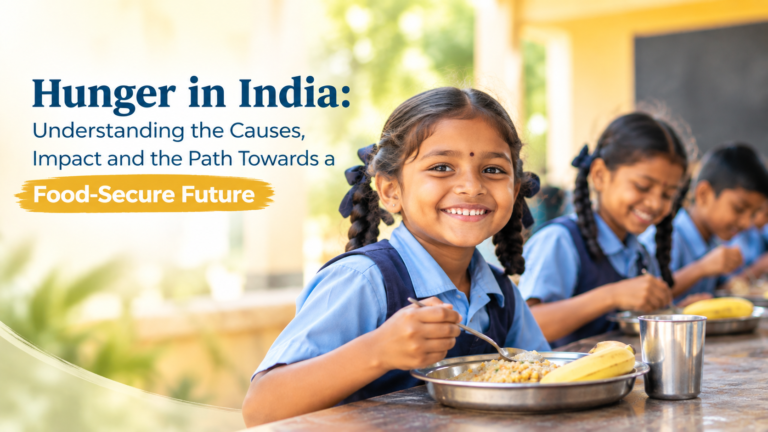
In several schools, the nutrition is served after the morning prayer. This simple practice creates a shared routine where children can begin their school day together with nourishment.
Understanding Hidden Hunger in Children
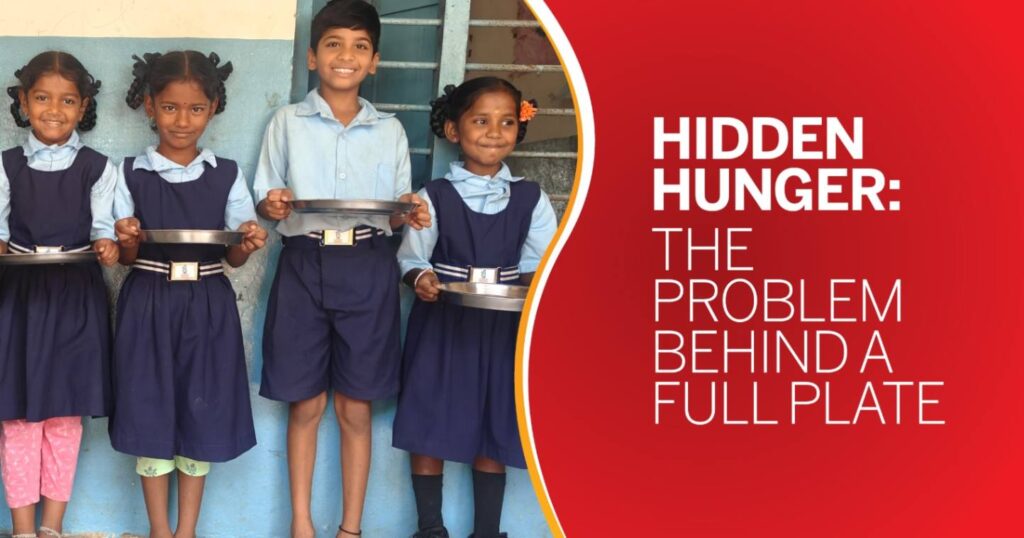
Hunger is not always visible.
A child may look healthy and have enough food to feel full but still lack essential nutrients required for healthy growth and development. This condition is commonly referred to as hidden hunger.
Hidden hunger occurs when the body does not receive adequate amounts of essential vitamins and minerals. A diet may provide calories without providing sufficient protein, iron and other micronutrients.
This is why nutrition is about more than simply filling an empty stomach. The quality and nutritional value of food matter too.
Our approach to morning nutrition reflects this broader understanding of nourishment. Over the years, Annapoorna has evolved from providing breakfast to focusing increasingly on nutrition security for school-going children.
The Beginning of Annapoorna’s Journey
The story of Annapoorna began on 5 July 2012 in Doddabele, near Bengaluru.
What started with breakfast for 50 government-school children has grown into a large-scale school nutrition initiative. In the early days, volunteers prepared food in their homes and served children at a nearby government school.
The experience highlighted a simple but powerful idea: when children receive nourishment at the beginning of the school day, the school environment itself can become more supportive of their overall well-being.
The Sri Sathya Sai Annapoorna Trust was subsequently registered in 2015. Since then, the initiative has expanded across different regions of India through partnerships with governments, schools, volunteers, corporates, farmers and other stakeholders.
Today, our work continues to focus on making morning nutrition available to children who need it.
What Does Annapoorna Provide?
The form of nutrition provided through the programme can vary depending on the region and the existing government nutrition schemes.
SaiSure with Milk
In several locations, SaiSure, a multi-nutrient health mix, is added to milk and served to children.
According to Annapoorna’s published information, a serving of SaiSure with milk is designed to provide important nutrients and contribute towards a child’s nutritional requirements.
Where government programmes already provide milk, Annapoorna works alongside those initiatives by adding nutritional supplementation rather than unnecessarily duplicating existing efforts.
Ragi-Based Nutrition
In states such as Andhra Pradesh and Telangana, a ragi-based drink is provided in certain locations.
Ragi, also known as finger millet, has traditionally been an important food in several parts of India and can form part of a nutritious diet.
Cooked Breakfast
Depending on the location and programme model, children may also receive freshly prepared breakfast through decentralised cooking centres or school-based arrangements.
These approaches allow the programme to adapt to local needs while keeping the central objective unchanged: ensuring that children receive nourishment before they begin their lessons.
Reaching Children Across India
From serving 50 children in Doddabele, the Annapoorna initiative has grown significantly.
The Trust currently reports providing morning nutrition to more than 1 crore (10 million) school-going children across 25 states and 4 Union Territories.
The programme has also crossed the milestone of more than a billion meals served, according to figures published by the Trust.
As the programme continues to expand, the objective remains consistent: to support children with nutrition so that hunger does not become an additional barrier to their education.
Reach figures can change as the programme grows. For the latest numbers, readers should refer to the official Annapoorna website and its most recent reports.
Everyone Has a Role in Fighting Child Hunger
Child nutrition is not the responsibility of one organisation alone. It requires collaboration between communities, governments, schools, teachers, parents, volunteers, donors and organisations.
There are several ways individuals and institutions can contribute.
Support nutrition programmes: Encourage initiatives that provide nutritious food to children who need it.
Volunteer: Community participation can strengthen school nutrition programmes and help them reach more children.
Partner with purpose: Corporates and institutions can contribute through meaningful partnerships, CSR initiatives and long-term support.
Spread awareness: Sharing reliable information about child hunger and nutrition can help more people understand the issue.
Support Annapoorna: Donations and partnerships can help us continue taking morning nutrition to more children and schools across India.
Building a Better Beginning for Every Child.
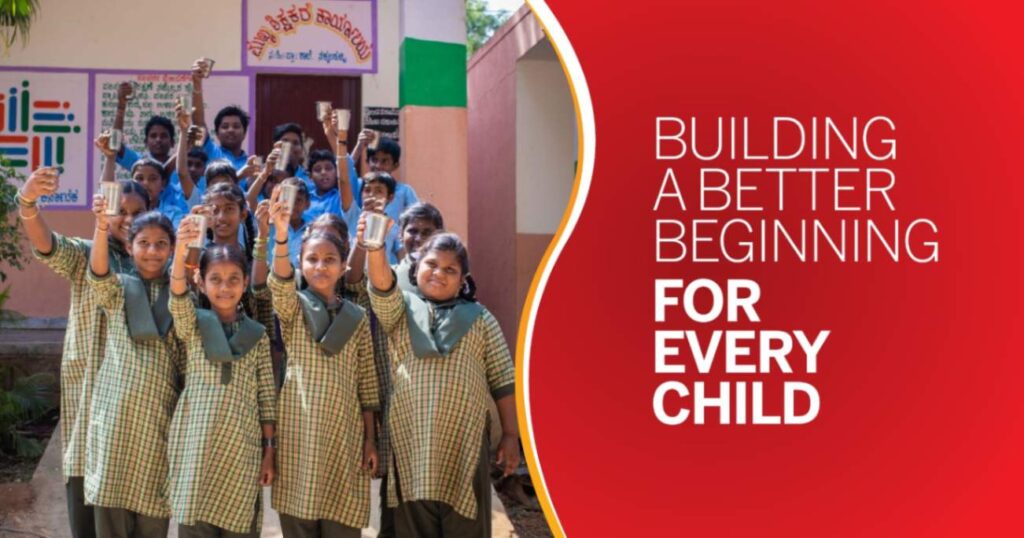
Education begins long before a child opens a textbook.
It begins with the ability to arrive at school, sit comfortably, listen to a teacher and participate in the day’s learning. Nutrition is an important foundation for that experience.
At Sri Sathya Sai Annapoorna Trust, our journey began with 50 children in one village school. Today, the programme reaches millions of school-going children across India.
Yet the purpose remains beautifully simple: no child should have to face the school day on an empty stomach when we can work together to provide a nourishing beginning.
What is hidden hunger?
Hidden hunger refers to a deficiency of essential vitamins and minerals, even when a person may be consuming enough calories to feel full. It is an important aspect of child nutrition because adequate calories alone do not necessarily mean adequate nutrition.
Who runs the Annapoorna Morning Nutrition Programme?
The programme is implemented by Sri Sathya Sai Annapoorna Trust, a charitable organisation headquartered at Muddenahalli in Chikkaballapur district, Karnataka.
Is the programme free for children?
Yes. The Trust provides the programme free of cost to children in the schools covered by its initiatives.
How can I support Annapoorna’s work?
Individuals, organisations and institutions can support Annapoorna through donations, partnerships, volunteering and awareness-building initiatives. Visit the official Annapoorna website to learn more about ways to contribute.