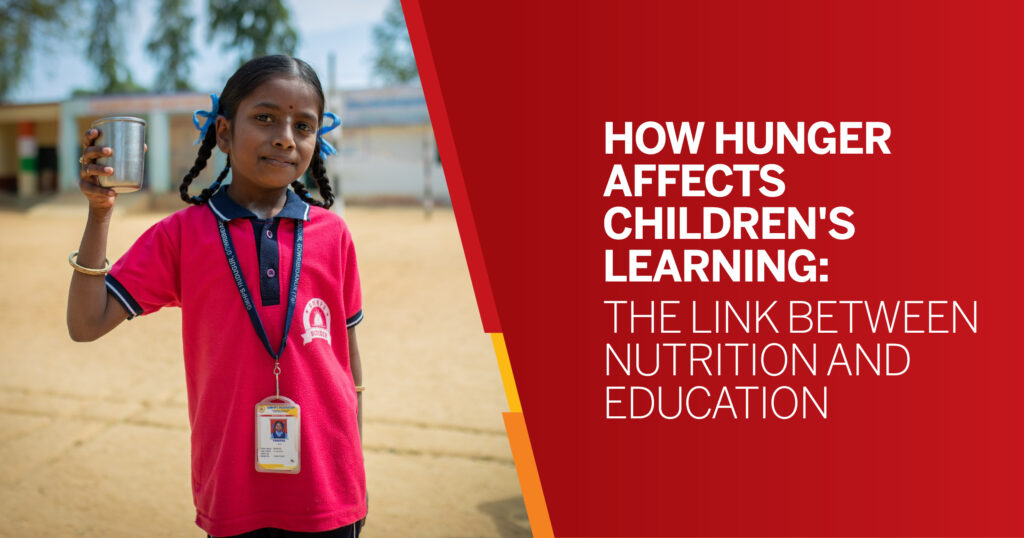
How Hunger Affects Children’s Learning: The Link Between Nutrition and Education
For a child, going to school is supposed to be a time for learning, exploring and building a foundation for the future. But when that child arrives at school hungry, focusing on lessons can become much more difficult. An empty stomach can affect attention, energy, classroom participation and the ability to make the most of educational opportunities.
How hunger affects children’s learning is therefore an important question when we talk about education and child development. Hunger is not only a food-related concern. When children do not consistently receive adequate and nutritious food, it can influence their physical well-being and their ability to participate effectively in school.
Addressing child hunger requires more than ensuring that children have something to eat. It means creating access to regular, nutritious food so that children can come to school ready to learn, participate and grow.
What Happens When a Child Goes to School Hungry?
Hunger can affect a child’s immediate physical and mental state. A child who has not eaten adequately may feel tired, weak, distracted or uncomfortable during school hours.
Instead of concentrating on what the teacher is explaining, the child may be thinking about food or simply struggling with low energy. This can make classroom participation more difficult.
The effects can vary from child to child, but regular food insecurity can create challenges that extend beyond a single school day.
This is why how hunger affects children’s learning needs to be understood as part of the wider connection between nutrition, health and education.
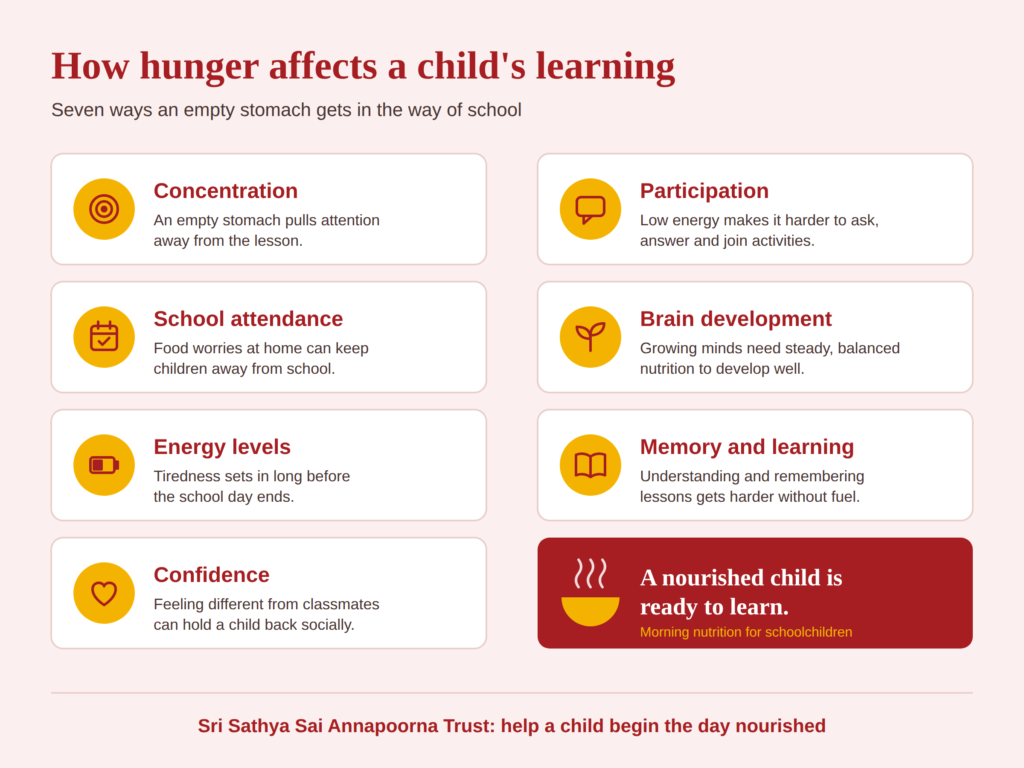
1. Hunger Can Reduce Concentration
Learning requires sustained attention. Children need to listen, process information, remember concepts and respond to questions.
When a child is hungry, maintaining that attention can become harder. Physical discomfort and a lack of energy may compete with the child’s ability to focus on classroom activities.
A nutritious meal can help address immediate hunger and provide energy needed during the school day. This is particularly important for children who may not have access to a sufficient breakfast before leaving home.
When children are able to attend class without the distraction of hunger, they have a better opportunity to engage with what is being taught.
2. Hunger Can Affect Classroom Participation
Learning is not limited to listening to a teacher. Children learn by asking questions, participating in activities, working with classmates and responding to lessons.
A hungry child may be less energetic or less willing to participate. They may withdraw from activities because they are uncomfortable, tired or simply unable to maintain the same level of energy as their peers.
Understanding how hunger affects children’s learning therefore means looking at participation as well as academic performance.
A classroom where children have their basic nutritional needs supported can create a more favourable environment for active participation.
3. Hunger and School Attendance
Food insecurity can also be connected with a child’s experience of school.
For families facing financial difficulties, ensuring regular meals can be challenging. In some situations, children may miss school because of circumstances at home or because they are affected by inadequate nutrition.
School nutrition programmes can help address part of this challenge by making nutritious food available within the school environment.
The connection between food and education is one reason school-based nutrition initiatives have become an important part of efforts to support children’s well-being.
4. Nutrition Supports Healthy Brain Development
Children’s brains undergo significant development during childhood. Adequate nutrition provides essential nutrients needed for growth and development.
A balanced diet includes a variety of nutrients obtained from foods such as cereals, pulses, vegetables, fruits, dairy or other appropriate sources. The exact nutritional requirements vary according to age and individual circumstances.
Poor nutrition during childhood can have consequences for health and development, making nutrition an important part of a child’s overall educational journey.
Therefore, how hunger affects children’s learning cannot be separated completely from the broader question of how nutrition affects children’s development.
5. Hunger Can Affect Energy Levels
A child spends several hours at school moving between classrooms, participating in activities and learning new concepts. These activities require energy.
When children do not receive adequate food, they may experience tiredness or reduced energy during the school day.
This can affect their willingness to participate in physical and classroom activities.
Providing a nutritious meal during the school day can help children address immediate hunger and support their energy needs.
For many children, something as simple as having a nutritious morning meal can make the school experience more comfortable and engaging.
6. Hunger Can Influence Memory and Learning
Learning involves more than simply receiving information. Children need to process, understand and remember what they learn.
Nutrition plays an important role in overall health and development, which are closely connected with children’s ability to learn.
If a child regularly experiences hunger or inadequate nutrition, it can create conditions that make consistent learning more challenging.
This does not mean that every hungry child will automatically perform poorly in school. Many factors influence learning, including teaching quality, home environment, sleep, health, learning resources and emotional well-being.
However, reducing hunger removes one significant barrier that can interfere with a child’s ability to participate fully in education.
7. Hunger Can Affect Confidence and Social Interaction
Children do not experience hunger only as a physical sensation. Food insecurity can also influence how children experience everyday social situations.
For example, a child who regularly lacks food may feel different from classmates who have access to regular meals. Such experiences can affect social participation and confidence.
Creating an environment where every child can access nutritious food can help make school a more inclusive space.
This is another important dimension of how hunger affects children’s learning—education is not only about marks and examinations but also about confidence, relationships and participation.
Why School Nutrition Matters
A school nutrition programme can address a practical problem: ensuring that children have access to food during the school day.
When nutrition initiatives are implemented consistently, they can become part of the wider ecosystem supporting children’s education.
Government programmes, NGOs, schools, teachers, parents and communities can all contribute to this effort.
The role of NGOs in supporting child nutrition can be particularly valuable at the community level. NGOs can work with schools and communities, mobilise volunteers and resources, and develop programmes that complement wider public efforts.
How Can We Help Reduce the Impact of Hunger on Learning?
Addressing how hunger affects children’s learning requires collective participation.
Individuals can support credible child nutrition organisations through donations or volunteering. Businesses can contribute through CSR initiatives and long-term partnerships. Schools and colleges can organise awareness and fundraising activities.
People can also use their professional skills—such as communication, technology, design, fundraising or digital marketing—to support organisations working towards better nutrition.
The important point is that participation does not have to look the same for everyone.
Some people may contribute financially. Others may contribute time, skills, networks or awareness.
Together, these actions can help create stronger nutrition support systems for children.
Building a Future Where Children Can Learn Without Hunger
The solution to child hunger is not simply about providing food once. Children need consistent access to adequate and nutritious meals.
Long-term progress requires cooperation between governments, NGOs, schools, communities, businesses and individuals.
The impact of hunger on children’s learning reminds us that nutrition and education cannot be treated as completely separate issues. A child who is struggling with hunger is also facing a barrier to fully experiencing school.
Removing that barrier can give children a better opportunity to focus on their education and participate in school life.
Every Child Deserves the Chance to Learn
Understanding how hunger affects children’s learning shows why a nutritious meal can be much more than food on a plate. It can help remove hunger as a barrier between a child and the opportunity to learn.
Sri Sathya Sai Annapoorna Trust is working towards this goal by providing morning nutrition to schoolchildren and bringing together communities, volunteers and supporters through seva.
By supporting initiatives that help children begin their school day with nourishment, individuals can become part of a larger effort to build a healthier and more nourished generation.
When we nourish a child, we support more than their hunger—we support their opportunity to learn, grow and dream.
Give a Child More Than a Meal
Understanding how hunger affects children’s learning reminds us that a nutritious meal can be much more than food on a plate. For a child, it can mean starting the school day with energy, confidence and a better opportunity to focus on learning.
Sri Sathya Sai Annapoorna Trust is working to address child hunger by providing morning nutrition to schoolchildren across communities. But creating lasting change requires all of us to participate.

You can be part of this movement. Your contribution can help support nutritious meals for schoolchildren and help more children begin their day nourished and ready to learn.
Your Support Can Make a Difference
Donate today. Help nourish a child. Help nurture a future.
Whether you choose to make a one-time contribution, become a regular donor or encourage others to support the cause, every act of generosity can contribute to the larger movement against child hunger.
Because when we feed a child, we don’t just fill a plate—we help create an opportunity to learn, grow and dream.
Support Sri Sathya Sai Annapoorna Trust and be a part of the journey towards a hunger-free, nourished future.
FAQs
1. How does hunger affect children’s learning?
Hunger can affect concentration, energy, classroom participation and a child’s ability to engage effectively with learning.
2. Can hunger affect a child’s concentration in school?
Yes. Hunger may cause physical discomfort, tiredness or distraction, making it harder for children to maintain attention during lessons and activities.
3. Why are nutritious meals important for schoolchildren?
Nutritious meals provide essential nutrients and energy that support children’s growth, health and development while helping address hunger during the school day.
4. Does hunger affect school attendance?
Food insecurity and related family circumstances can contribute to difficulties with regular school attendance. School-based nutrition programmes can help address one part of this challenge.
5. How does nutrition support children’s education?
Adequate nutrition supports children’s overall health and development and can help remove hunger as a barrier to concentration, participation and learning.
6. What can individuals do to help children facing hunger?
Individuals can donate, volunteer, support awareness and fundraising initiatives, or contribute professional skills to credible child nutrition programmes.
7. How can school nutrition programmes help children?
School nutrition programmes can provide children with access to nutritious food during the school day and become part of the wider support system for children’s education and well-being.
8. Why is morning nutrition important for schoolchildren?
A nutritious morning meal can help address immediate hunger and provide energy during the school day, helping children have a more comfortable and engaging school experience.
Lorem ipsum dolor sit amet, consectetur adipiscing elit. Ut elit tellus, luctus nec ullamcorper mattis, pulvinar dapibus leo.