Hidden Hunger in India: Why a Full Stomach Does Not Always Mean a Nourished Child

Hidden hunger is the most overlooked nutrition problem in India today, and it is found in homes where nobody goes to bed without a meal. It occurs when a diet supplies enough calories but too few essential micronutrients, such as iron, zinc, vitamin A, iodine, folate and vitamin B12. The child eats, the hunger pangs stop, and the deficiency continues unseen. Nothing about the child’s plate or appearance raises an alarm, yet the body is running short of the materials it needs to build blood, fight infection and develop the brain.
What Hidden Hunger Really Means
Hidden hunger is a clinical term for micronutrient deficiency, but its real meaning is simpler: the body is hungry for quality, not quantity. Conventional hunger is measured in missed meals. Hidden hunger is measured in blood tests, growth charts and classroom performance.
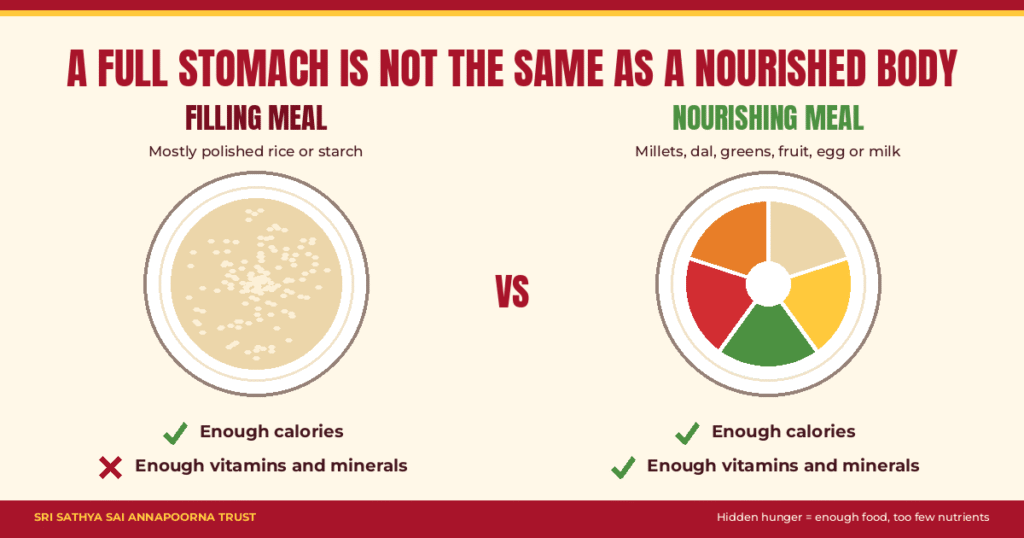
A typical example is a diet of polished rice, a thin dal and a little oil. It keeps a child full and active, but it can leave large gaps in iron, vitamin A and zinc. Over months and years, those gaps shape how a child grows, learns and falls ill.
The Scale of Hidden Hunger in India
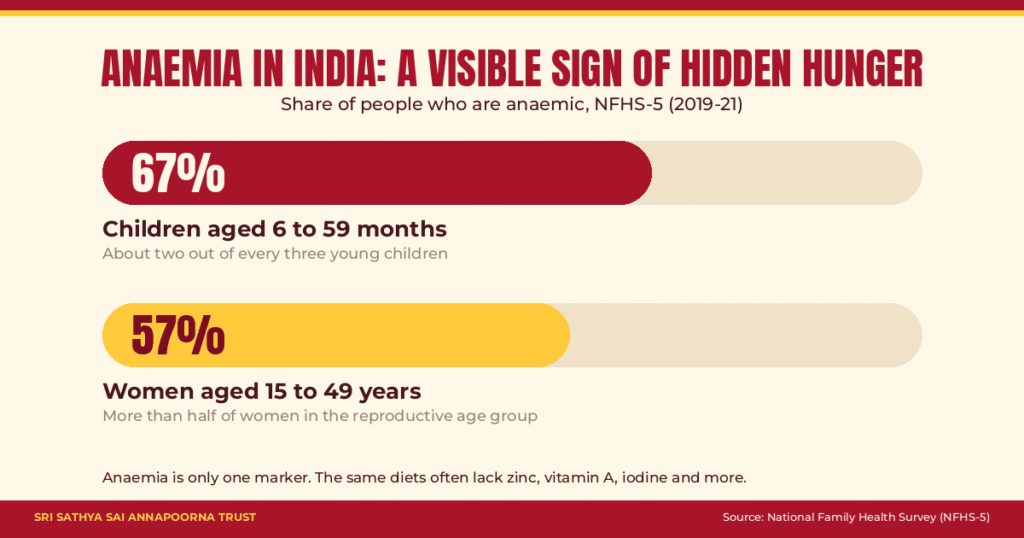
India’s own health data shows how deep the problem runs. The National Family Health Survey (NFHS-5, 2019-21) found that about. 67 % of children aged 6 to 59 months are anaemic, along with 57 % of women aged 15 to 49. Anaemia is only one visible marker of hidden hunger, and it points to wider deficiencies in the same diets.
Globally, health agencies estimate that around two billion people live with some form of micronutrient deficiency. India carries a significant share of that burden, and school-age children are among the most affected.
Why Hidden Hunger Is So Hard to Detect
Three features make hidden hunger difficult to spot:
- It has no single symptom. Tiredness, frequent colds, poor focus and slow growth look like ordinary childhood problems.
- It does not depend on body weight. A child of average build can still be deficient.
- It builds slowly. By the time a deficiency is diagnosed, learning and growth may already have been affected.
This is why hidden hunger is often described as a silent crisis. Families and teachers rarely connect a child’s low energy in class to what was, or was not, on the plate that morning.
What Causes Hidden Hunger Among Children
The causes are practical and interlinked:
- Cereal-heavy diets with little variety, where rice or wheat dominates every meal.
- Rising food costs, which push pulses, eggs, milk and fresh produce out of reach for low-income families.
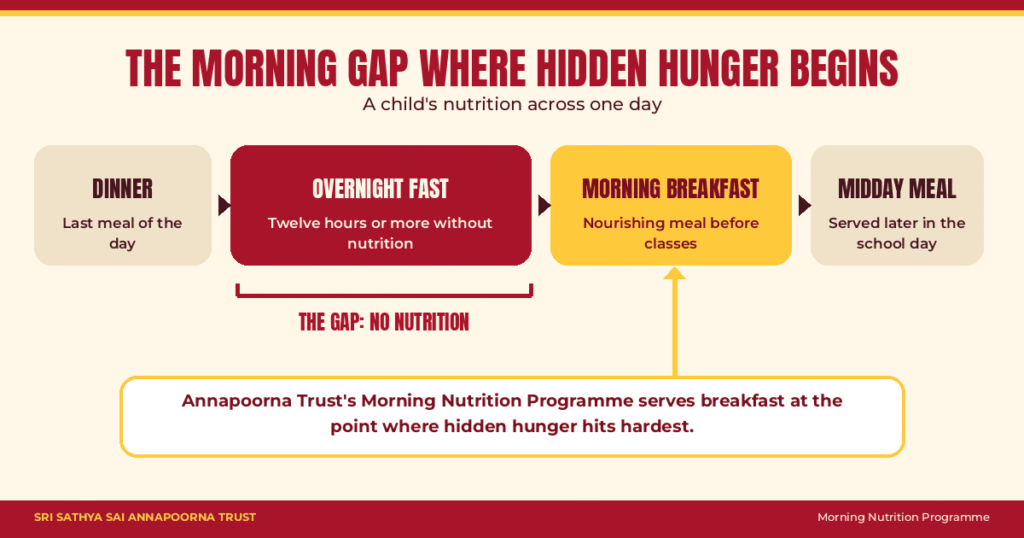
- Long overnight gaps. A child who sleeps, wakes and walks to school without breakfast may go twelve hours or more without nutrition.
- Repeated infections, which reduce appetite and block nutrient absorption.
- Limited nutrition awareness, where “fed” is assumed to mean “nourished”.
How Hidden Hunger Affects Learning and Long-Term Health
The consequences of hidden hunger are measurable. Iron deficiency affects concentration, memory and energy, which are the exact skills children need in the classroom. Zinc and vitamin A deficiencies weaken immunity, so children fall sick more often and miss more school. Iodine deficiency can hold back cognitive development.
Over a lifetime, the effects add up: lower school attainment, reduced earning potential and poorer health outcomes. Hidden hunger is therefore a development issue as much as a health issue.
The Morning Gap: Where Hidden Hunger Can Be Interrupted
Government school meals reach children at midday, which leaves the early morning as an unaddressed window. Children arriving at school after an overnight fast are at their most vulnerable, when attention and energy matter most.
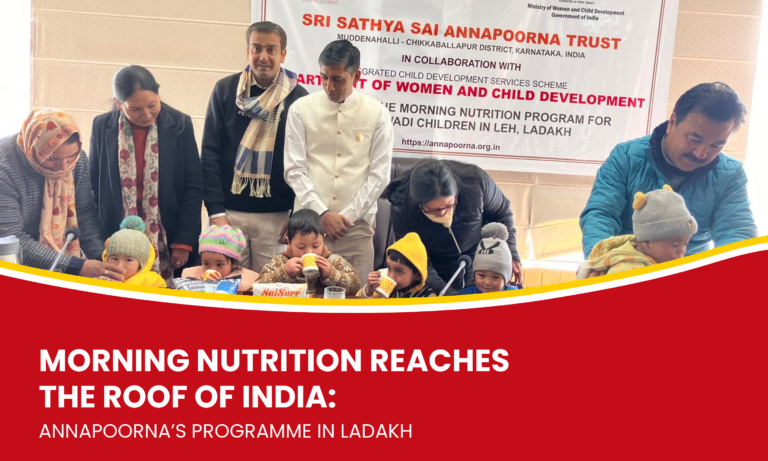
This is the gap that Sri Sathya Sai Annapoorna Trust set out to close through its Morning Nutrition Programme. By serving a freshly cooked, balanced breakfast before classes begin, the Trust reaches children at the point where hidden hunger is most likely to affect them. The programme has grown from village-level beginnings into a network of serving centres, including communities such as Doddabele and Vinayak Nagar, where breakfast has become a dependable part of the school day.
The impact goes beyond food. A reliable morning meal supports regular attendance, helps children settle and concentrate, and gives families the reassurance that the day begins well. For children living with hidden hunger, consistency matters as much as the menu.
SaiSure: Moving From Cooked Breakfast to Targeted Nutrition
Addressing hidden hunger at scale demands more than filling bowls, and the Trust has taken that next step with SaiSure. The initiative builds on the success of cooked breakfast programmes and aims to strengthen the nutritional quality of what children receive, tackling micronutrient gaps directly rather than leaving them to chance. It reflects a clear principle: ending hidden hunger means shifting the question from “Has the child eaten?” to “Has the child been nourished?”
What Families, Schools and Donors Can Do About Hidden Hunger
Hidden hunger is preventable, and action is possible at every level:
- Families can add green leafy vegetables, pulses, seasonal fruit, eggs, milk and millets to everyday meals.
- Schools can support morning nutrition programmes and watch for signs such as fatigue and frequent absence.
- Donors and volunteers can sponsor breakfasts, giving a child a nourishing start to the day.
- Communities can spread awareness that a full plate and a nourished body are not always the same thing.
Frequently Asked Questions (FAQs)
- What is hidden hunger?
Hidden hunger is a deficiency of essential vitamins and minerals that occurs even when a person eats enough calories. It is also known as micronutrient malnutrition.
- How is hidden hunger different from regular hunger?
Regular hunger means not having enough food. Hidden hunger means having food that lacks sufficient nutrients, so the signs are far less visible.
- Which nutrient deficiencies are linked to hidden hunger in India?
Iron, vitamin A, zinc, iodine, folate and vitamin B12 deficiencies are the most commonly associated with hidden hunger.
- What are the warning signs of hidden hunger in children?
Persistent tiredness, frequent infections, poor concentration, pale skin and slow growth can all point to hidden hunger. A doctor’s check-up can confirm it.
- Why is breakfast important in tackling hidden hunger?
After an overnight fast, a nutritious breakfast supplies energy and nutrients when children need them most, which supports attention, attendance and overall growth.
- How does Annapoorna Trust help reduce hidden hunger?
Annapoorna Trust serves nutritious morning meals to school children through its Morning Nutrition Programme and extends its work through SaiSure, which focuses on closing micronutrient gaps.
- How can I support the fight against hidden hunger?
Supporters can sponsor a child’s breakfast, volunteer at a serving centre or share information about hidden hunger. Details are available on the Annapoorna Trust website.